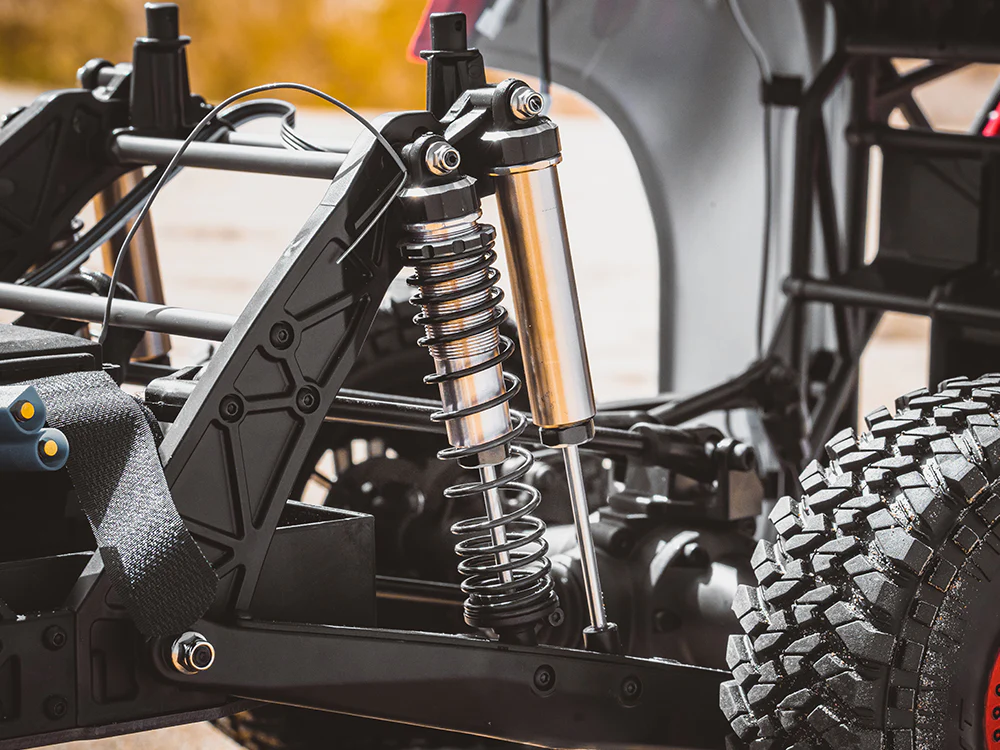
Suspension is one of the most impactful areas of vehicle modification available to road drivers — and one of the most frequently misunderstood. The conversation tends to default to a simple axis: standard suspension versus aftermarket, with the implicit assumption that aftermarket equals better. The reality is considerably more nuanced. The right suspension setup depends on what the vehicle is, how it is used, what roads it typically travels, and what the driver actually wants from it.
Why People Modify Suspension
The motivations divide into two broad categories: appearance and handling. Some drivers want a lower, more purposeful stance. Others want improved handling characteristics — less body roll, better cornering response, a more planted feel at motorway speeds. Many want both. What is worth understanding is that the pursuit of one does not automatically deliver the other, and the two can sometimes be in tension.
Factory Suspension and Its Compromises
Manufacturers design suspension systems to work across the full range of their customer base and, in many cases, across multiple markets with different road surfaces and legal requirements. Ride height is set to ensure adequate ground clearance. Spring rates are chosen to balance comfort and handling for a majority of drivers. Geometry settings are typically set conservatively, prioritising stability and tyre wear over outright cornering sharpness.
None of these compromises are unreasonable. But they do mean that factory suspension leaves room for a driver with specific preferences to adjust the setup in ways that better suit their vehicle and how they use it.
Lowering Springs
Lowering springs are the most accessible suspension upgrade and, for many road vehicles, a sensible starting point. A lowering spring replaces the factory spring with one that settles the vehicle at a lower ride height — typically between 20mm and 40mm lower than standard. The spring rate is usually slightly higher than the factory spring to compensate for reduced suspension travel.
The benefit is a lower centre of gravity and reduced body roll during cornering. The trade-off is some reduction in suspension travel, which can mean a firmer response to road imperfections. On a well-chosen product matched to the vehicle, this trade-off is manageable for daily use. On a product with too aggressive a rate drop, the result can be a car that bounces over road joins and grounds on steep ramps.
When fitting lowering springs, the vehicle should receive a full wheel alignment afterwards. Changing the ride height affects camber, toe, and sometimes caster. An installation without subsequent alignment is an incomplete job.
Coilover Systems
A coilover is a combined spring and damper unit that replaces both the factory spring and shock absorber. The key characteristic for road use is adjustability: most allow ride height to be set by threading the spring perch, and many allow some adjustment of damper characteristics.
A coilover set correctly for a road car — at a sensible height with damper settings appropriate for the suspension travel available — will generally offer better handling than the factory setup while remaining usable on UK roads. A coilover wound to its lowest position with stiff damper settings is not a better road setup; it is a car that will crash over every road join and potentially ground on everything. The setting, not the component, determines the result.
Damper Quality Matters
The damper controls how quickly the spring extends and compresses. One that is too weak allows bobbing over undulations. One that is too firm prevents free suspension movement. Budget coilover kits sometimes compromise on damper quality to hit a price point — the springs may be reasonable, but poorly matched dampers can produce worse results than the factory setup in terms of both comfort and actual grip. Spending appropriately on quality is not a luxury consideration.
Geometry: The Often Neglected Variable
Before spending money on springs or coilovers, it is worth having the vehicle's alignment measured. Many vehicles with standard suspension and significant mileage are driving around with geometry that has drifted from specification through kerb impacts and general wear. A geometry correction alone — considerably less expensive than a coilover installation — can produce a more meaningful improvement in handling feel than any spring change would.
Wheel alignment covers toe (straight-line tracking), camber (tyre contact angle in corners), caster (steering feel and stability), and thrust angle (whether the rear axle is square to the vehicle's centreline). For standard road use, factory geometry specifications represent a sensible baseline. Minor adjustments within those specifications can improve turn-in without significantly affecting tyre wear.
What to Expect on UK Roads
UK road surfaces vary enormously. Motorways are generally smooth. Urban A-roads have road joins, repairs, and surface irregularities requiring meaningful suspension compliance. Rural B-roads can be considerably worse, with broken surfaces and occasional deep potholes demanding good suspension travel.
A setup that works well on a smooth dual carriageway may be unpleasant on a typical commute through a post-industrial town. The right suspension choice for someone doing mostly motorway miles is different from one appropriate for a driver regularly covering poorly maintained rural roads. This is one of the reasons we begin all suspension projects at Qorvixa with a conversation about how and where the vehicle is used — rather than defaulting to the most aggressive specification available.
Thinking About Suspension Work?
Get in touch to discuss your vehicle and what setup would suit how you actually drive it.
Discuss Your Vehicle